
uniformwala.co.in

School Uniform Fabric Guide

Terry Cotton vs PV Fabric for School Uniforms

Choosing the right fabric is essential for creating comfortable, durable, and cost-effective school uniforms. Terry Cotton and PV (Poly Viscose) fabrics are two of the most widely used options for school shirts, trousers, skirts, and blazers. This comprehensive guide compares both fabrics based on comfort, durability, breathability, maintenance, appearance, and cost to help schools, uniform suppliers, and parents make the right decision.

๐Ÿ‘” Fabric Comparison Guide ๐Ÿงต Comfort & Durability ๐Ÿซ School Uniform Experts ๐Ÿ“Š Buying Recommendations

Table of Contents

Introduction

Selecting the right fabric is one of the most important decisions when planning school uniforms. The fabric determines how comfortable students feel throughout the school day, how well the uniform withstands daily wear, and how much maintenance is required by parents. A good uniform fabric should provide comfort, durability, colour retention, and long-term value while meeting the school's quality standards and budget.

Among the most commonly used school uniform fabrics in India, Terry Cotton and PV (Poly Viscose) are trusted choices for shirts, trousers, skirts, blazers, and staff uniforms. Although both fabrics are widely used, they differ in fibre composition, texture, wrinkle resistance, durability, breathability, and overall performance. Understanding these differences helps schools select the most suitable fabric for their climate, student requirements, and institutional objectives.

This comprehensive comparison guide explains Terry Cotton and PV fabrics in detail, covering their characteristics, manufacturing process, advantages, maintenance requirements, and practical applications. Whether you are a school administrator, procurement manager, uniform supplier, or parent, this guide will help you make a well-informed fabric selection.

๐ŸŽฏ What You'll Learn

By the end of this guide, you'll clearly understand the differences between Terry Cotton and PV fabrics, compare their performance across key parameters, and discover which fabric is best suited for different types of school uniforms and institutional requirements.

What is Terry Cotton Fabric?
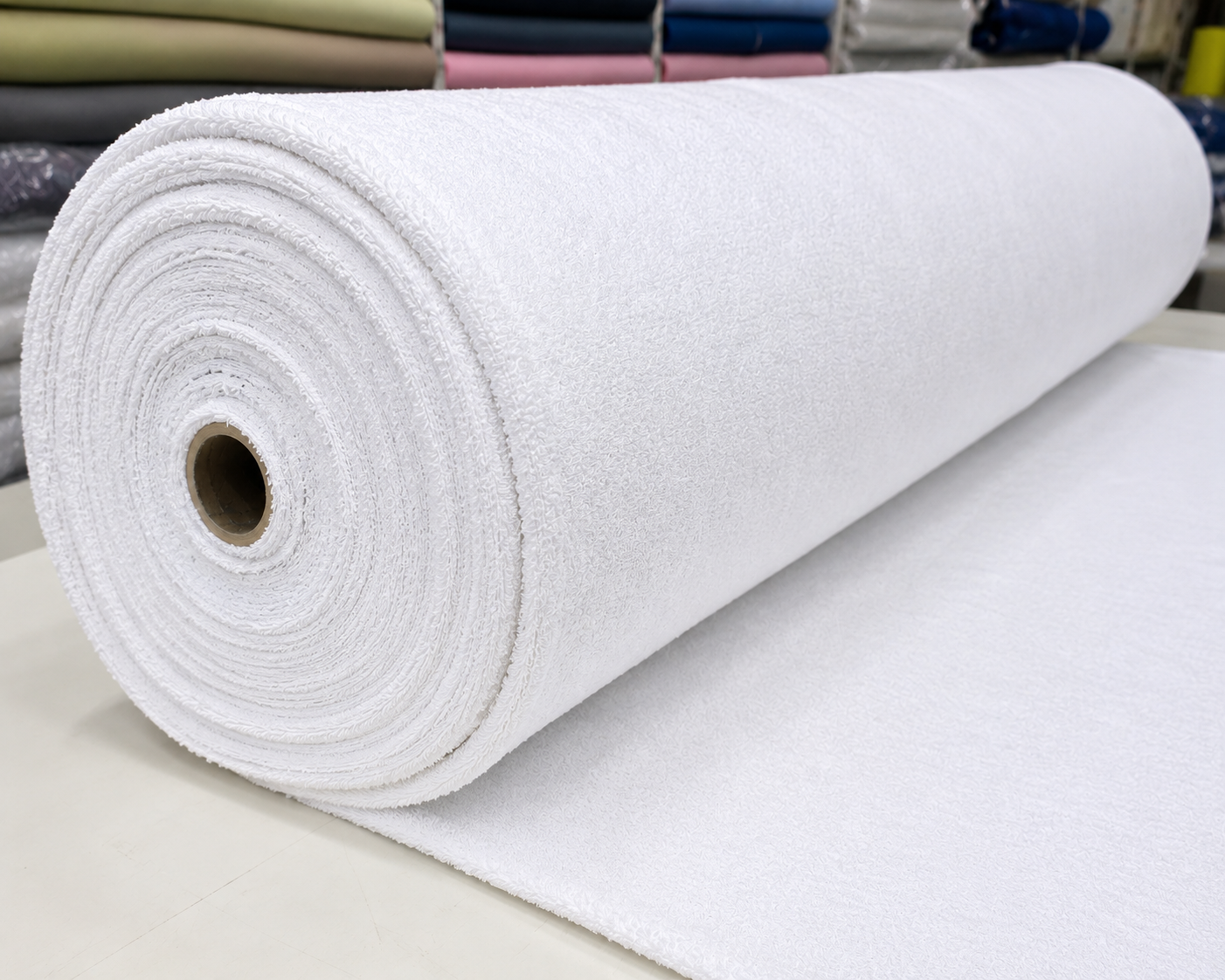
Cotton Rich Blend
Terry Cotton Fabric Roll for School Uniforms

Terry Cotton is a blended fabric made by combining natural cotton fibres with polyester. It offers the softness and breathability of cotton while improving durability, wrinkle resistance, and colour retention through polyester. This balanced combination makes Terry Cotton one of the most popular choices for school uniforms across India.

Compared with pure cotton, Terry Cotton is easier to maintain and retains its appearance even after frequent washing. The fabric provides good comfort during long school hours while reducing shrinkage and wrinkles, making it practical for both students and parents.

Because of its excellent balance of comfort, durability, appearance, and affordability, Terry Cotton is widely used for school shirts, trousers, skirts, house uniforms, staff uniforms, and institutional apparel where everyday performance is essential.

๐Ÿงต Key Characteristics

โ€ข Cotton & Polyester Blend
โ€ข Soft & Comfortable Feel
โ€ข Better Wrinkle Resistance
โ€ข Good Breathability
โ€ข Excellent Colour Retention

๐Ÿซ Best Used For

โ€ข School Shirts
โ€ข School Trousers & Skirts
โ€ข Daily School Uniforms
โ€ข Staff Uniforms
โ€ข Institutional Uniform Programs

What is PV Fabric?
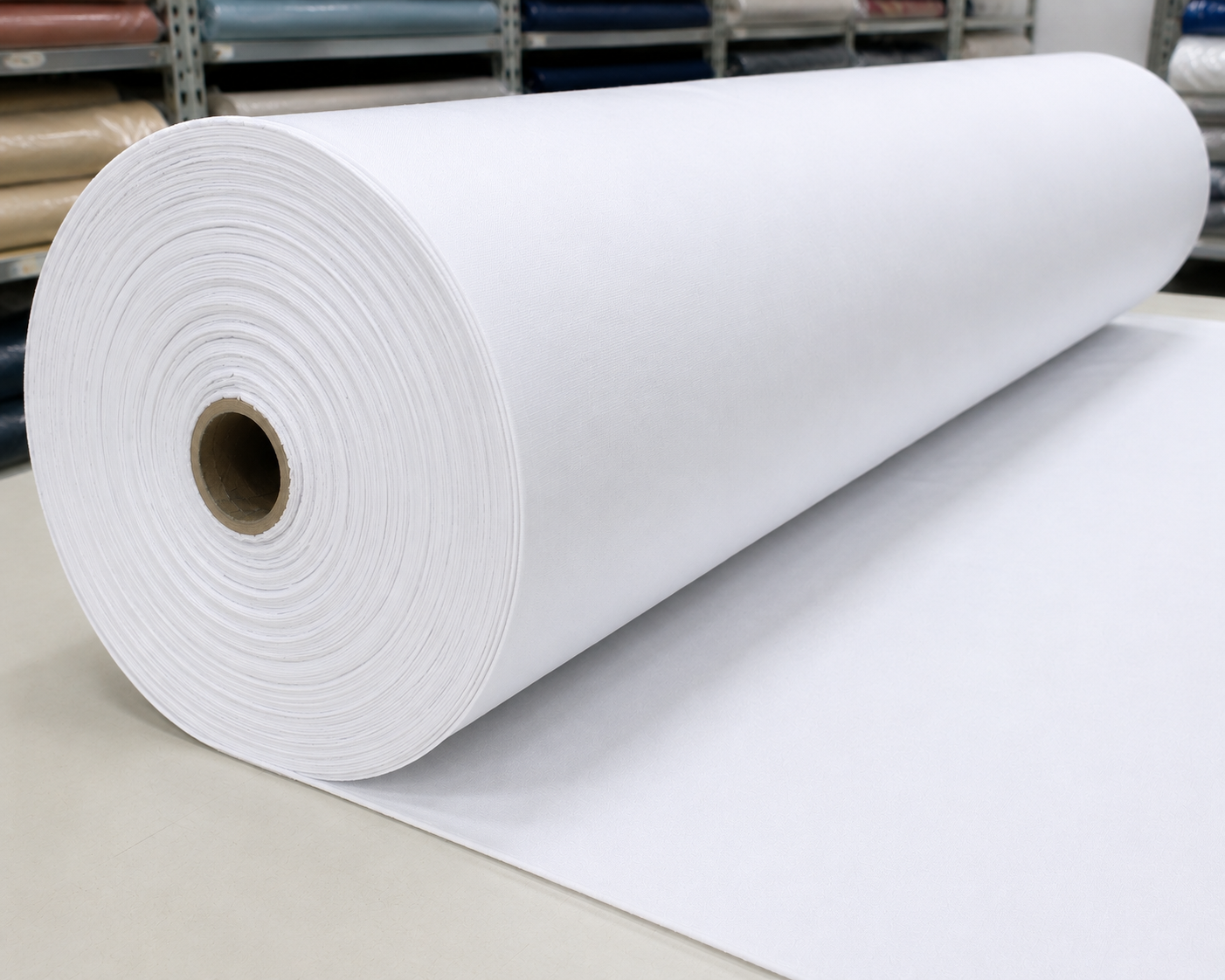
Polyester + Viscose Blend
PV Fabric Roll for School Uniforms

PV (Poly Viscose) fabric is a blended textile made by combining polyester and viscose fibres. Polyester provides strength, wrinkle resistance, shape retention, and durability, while viscose adds softness, smoothness, and an improved drape. This balanced combination makes PV fabric one of the most widely used materials for school uniforms, formal wear, and institutional clothing. :contentReference[oaicite:0]{index=0}

Compared with Terry Cotton, PV fabric has a cleaner and more formal appearance, making it a preferred choice for school trousers, skirts, blazers, and staff uniforms. It is easy to maintain, dries quickly after washing, and resists wrinkles, making it practical for everyday school use. :contentReference[oaicite:1]{index=1}

Many schools choose PV fabric because it offers an excellent balance of professional appearance, long-lasting durability, and cost-effectiveness. Its ability to retain colour and shape after repeated washing makes it especially suitable for large institutional uniform programs. :contentReference[oaicite:2]{index=2}

๐Ÿงต Key Characteristics

โ€ข Polyester & Viscose Blend
โ€ข Smooth & Professional Finish
โ€ข Excellent Wrinkle Resistance
โ€ข High Durability
โ€ข Easy Wash & Quick Dry

๐Ÿซ Best Used For

โ€ข School Trousers
โ€ข School Skirts
โ€ข School Blazers
โ€ข Staff Uniforms
โ€ข Formal Institutional Uniforms

Terry Cotton vs PV Fabric Comparison

Both Terry Cotton and PV (Poly Viscose) fabrics are widely used in school uniforms, but they serve different purposes. Terry Cotton offers better softness and comfort, while PV fabric is known for its durability, wrinkle resistance, and professional appearance. The comparison below highlights the key differences to help schools choose the right fabric.

Feature Terry Cotton PV Fabric
Comfort โญโญโญโญโญ Winner โญโญโญโญโ˜†
Softness โญโญโญโญโญ Winner โญโญโญโญโ˜†
Durability โญโญโญโญโ˜† โญโญโญโญโญ Winner
Wrinkle Resistance โญโญโญโ˜†โ˜† โญโญโญโญโญ Winner
Breathability โญโญโญโญโญ Winner โญโญโญโญโ˜†
Colour Retention Very Good Excellent Winner
Ease of Maintenance Good Excellent Winner
Professional Appearance Very Good Excellent Winner
Cost Moderate Generally More Economical Winner
Best Applications School Shirts & Daily Wear Trousers, Skirts, Blazers & Staff Uniforms Recommended

Which Fabric is Better for School Uniforms?

Both Terry Cotton and PV Fabric are excellent choices for school uniforms, but the right option depends on the type of uniform, climate, maintenance expectations, and budget. The recommendations below will help schools choose the most suitable fabric for different institutional requirements.

๐Ÿ‘• Choose Terry Cotton If...

โ€ข Student comfort is your highest priority.

โ€ข Your school is located in a hot or humid region.

โ€ข You need breathable fabric for long classroom hours.

โ€ข The uniforms include shirts, house uniforms, or summer wear.

โ€ข You prefer a softer, cotton-rich feel.

๐Ÿ‘” Choose PV Fabric If...

โ€ข You want a formal and professional appearance.

โ€ข Low maintenance and wrinkle resistance are important.

โ€ข The uniforms include trousers, skirts, blazers, or staff uniforms.

โ€ข Long-term durability and colour retention are priorities.

โ€ข You need a cost-effective fabric for large institutional orders.

๐Ÿ† Our Recommendation

For most schools, the best solution is to use both fabrics strategically. Terry Cotton is an excellent choice for shirts and uniforms where comfort and breathability are essential, while PV Fabric is ideal for trousers, skirts, blazers, and staff uniforms because of its durability, wrinkle resistance, and smart appearance. This combination provides students with maximum comfort while helping schools achieve long-lasting quality and better value for money.

How Terry Cotton & PV Fabric are Manufactured

Although Terry Cotton and PV Fabric have different fibre compositions, both undergo a series of carefully controlled manufacturing processes to achieve the durability, appearance, and performance required for school uniforms. Each stage plays an important role in determining the final quality of the fabric.

๐ŸŒพ
Step 1

Fibre Preparation

Cotton, polyester, and viscose fibres are selected and prepared according to the required fabric blend and quality standards.

๐Ÿงต
Step 2

Yarn Spinning

The fibres are spun into uniform yarns that provide the required strength, smoothness, and consistency for weaving.

๐Ÿชก
Step 3

Fabric Weaving

High-speed weaving machines interlace the yarns to produce durable fabric suitable for school uniforms and institutional wear.

๐ŸŽจ
Step 4

Dyeing & Finishing

The fabric is dyed, softened, and treated to improve colour fastness, wrinkle resistance, and overall appearance.

๐Ÿ”
Step 5

Quality Inspection

Each batch is tested for GSM, colour consistency, shrinkage, weaving quality, and durability before approval.

๐Ÿ“ฆ
Step 6

Packing & Dispatch

The finished fabric is rolled, labelled, packed, and dispatched to garment manufacturers and institutional buyers.

๐Ÿ’ก Industry Insight

The long-term performance of Terry Cotton and PV Fabric depends not only on the fibre blend but also on the quality of spinning, weaving, dyeing, and finishing. Schools should always evaluate fabric samples, GSM, colour fastness, and manufacturing consistency before placing bulk uniform orders.

Leading Terry Cotton & PV Fabric Manufacturers in India

India has one of the world's largest textile industries, supplying premium Terry Cotton, PV (Poly Viscose), and blended fabrics for school uniforms, corporate apparel, workwear, and institutional clothing. The following manufacturers are widely recognised for their expertise in textile manufacturing and uniform fabric production.

Manufacturer Headquarters Primary Products Suitable For
Arvind Limited Ahmedabad, Gujarat Cotton, Blended & Uniform Fabrics Premium School Uniforms
Raymond Lifestyle Mumbai, Maharashtra Suiting & PV Fabrics School Blazers & Staff Uniforms
Donear Industries Mumbai, Maharashtra PV & Suiting Fabrics Formal School Uniforms
Siyaram Silk Mills Mumbai, Maharashtra Poly Viscose & Blended Fabrics Institutional Uniforms
Vardhman Textiles Ludhiana, Punjab Cotton Yarn & Fabrics School Shirts
Alok Industries Mumbai, Maharashtra Cotton & Blended Fabrics Bulk Uniform Manufacturing
Welspun Living Mumbai, Maharashtra Cotton Textile Products Premium Cotton Fabrics
Trident Group Punjab, India Cotton Yarn & Textiles Institutional Textile Supply
Nahar Spinning Mills Ludhiana, Punjab Yarn & Blended Fabrics Uniform Fabric Manufacturing
Sutlej Textiles & Industries Chandigarh, India Blended Fabrics & Yarn School Uniform Fabrics

๐Ÿ“Œ Procurement Tip

While selecting a fabric manufacturer or supplier, schools should evaluate sample quality, GSM consistency, colour fastness, shrinkage, production capacity, and after-sales support instead of relying only on brand name or price. Requesting fabric samples before placing bulk orders is always recommended.

Expert Buying Tips

Selecting the right fabric is a long-term investment for every school. Before finalising Terry Cotton or PV Fabric for your institution, consider the following expert recommendations to ensure better comfort, durability, appearance, and value for money.

01

Match the Fabric to the Uniform Type

Terry Cotton is generally better suited for school shirts because of its softness and breathability, while PV Fabric is ideal for trousers, skirts, blazers, and staff uniforms where durability and wrinkle resistance are priorities.

02

Always Request Fabric Samples

Before placing a bulk order, inspect fabric samples for GSM, colour consistency, shrinkage, texture, stitching compatibility, and overall finish. Sample approval helps avoid quality issues later.

03

Evaluate Long-Term Value

Do not compare fabrics based only on price. Consider expected lifespan, maintenance costs, colour retention, replacement frequency, and parent satisfaction to determine the best long-term value.

04

Choose a Trusted Uniform Supplier

Partner with suppliers who can provide consistent fabric quality, bulk production capacity, timely delivery, proper quality checks, and dependable after-sales support for school uniform programs.

Fabric Care & Maintenance Tips

Proper care and maintenance help Terry Cotton and PV school uniforms maintain their appearance, comfort, and durability throughout the academic year. Following these simple practices can significantly extend the life of school uniforms while preserving fabric quality.

๐Ÿงบ

Wash with Mild Detergent

Use a gentle detergent and avoid excessive bleach or harsh chemicals. Mild washing helps preserve fabric fibres, colour, and overall softness.

๐ŸŒก๏ธ

Wash in Cold or Lukewarm Water

Cold or lukewarm water helps reduce shrinkage, maintains colour consistency, and protects both Terry Cotton and PV fabrics from unnecessary stress.

โ˜€๏ธ

Dry in Shade

Whenever possible, dry uniforms in a shaded and well-ventilated area instead of direct sunlight to minimise fading and extend the life of the fabric.

๐Ÿงผ

Iron at Recommended Temperature

Always follow the recommended ironing temperature based on the fabric composition. This helps maintain a neat appearance without damaging the fibres.

Frequently Asked Questions

Below are answers to some of the most common questions schools, uniform suppliers, and parents ask when comparing Terry Cotton and PV fabrics.

Which fabric is more comfortable for students?
Terry Cotton generally offers better comfort and breathability because of its higher cotton content. It is a preferred choice for school shirts and uniforms worn for long classroom hours.
Which fabric lasts longer?
PV Fabric is usually more durable because polyester improves strength, wrinkle resistance, and shape retention, making it ideal for trousers, skirts, and blazers.
Which fabric requires less ironing?
PV Fabric wrinkles less than Terry Cotton and usually requires minimal ironing, making it easier for parents to maintain on a daily basis.
Is Terry Cotton suitable for hot weather?
Yes. Terry Cotton is more breathable than PV Fabric, making it a good choice for schools located in warm and humid climates.
Can schools use both Terry Cotton and PV Fabric together?
Yes. Many schools use Terry Cotton for shirts and PV Fabric for trousers, skirts, blazers, and staff uniforms to achieve the best combination of comfort, durability, and professional appearance.
How should schools choose between Terry Cotton and PV Fabric?
The decision should be based on climate, student comfort, maintenance requirements, budget, and the type of uniform being manufactured. Evaluating fabric samples before bulk production is always recommended.

Conclusion

Both Terry Cotton and PV Fabric are excellent choices for school uniforms, but each fabric serves a different purpose. Terry Cotton provides superior comfort, softness, and breathability, making it an ideal option for school shirts and uniforms worn in warm weather. PV Fabric, on the other hand, offers excellent durability, wrinkle resistance, colour retention, and a smart professional appearance, making it highly suitable for trousers, skirts, blazers, and staff uniforms.

Rather than selecting a single fabric for every garment, many educational institutions achieve the best results by using both fabrics strategically. This approach improves student comfort while ensuring uniforms remain durable, easy to maintain, and cost-effective throughout the academic year.

๐Ÿ† Final Recommendation

For most schools, the ideal uniform program combines the strengths of both fabrics. Use Terry Cotton for garments where comfort and breathability are the highest priorities, and choose PV Fabric where durability, wrinkle resistance, and a professional appearance are essential. Before placing bulk orders, always evaluate fabric samples, GSM, colour fastness, stitching performance, and supplier reliability to ensure long-term satisfaction for both schools and parents.