
How to Choose the Right School Uniform: Complete Buying Guide
Choosing the right school uniform is about much more than appearance. The ideal uniform should provide comfort, durability, safety and a professional look while reflecting your school's identity. This comprehensive guide will help parents, schools and educational institutions understand fabrics, sizing, seasonal requirements, quality standards and buying tips before making the right decision.
📌 Quick Facts
Introduction
A school uniform is more than just a dress code—it reflects a school's identity, values and commitment to discipline. The right uniform creates a sense of belonging among students while ensuring comfort, durability and a professional appearance throughout the academic year. Whether you are a school administrator planning a new uniform program or a parent purchasing uniforms for your child, making the right choice requires careful consideration.
Selecting a school uniform involves evaluating several important factors, including fabric quality, climate suitability, student comfort, durability, sizing accuracy, maintenance requirements and overall cost. A well-designed uniform should support students during classroom learning, outdoor activities and daily movement while maintaining its appearance after repeated washing and regular use.
This comprehensive buying guide has been created to help schools, educational institutions and parents understand every aspect of school uniforms. From comparing different fabric options and understanding size charts to choosing seasonal uniforms and avoiding common purchasing mistakes, this guide provides practical information to help you make confident and informed decisions.
📌 In This Guide You'll Learn
- How to choose the right school uniform for different age groups.
- Which fabrics are best for summer, winter and sports uniforms.
- How to measure students correctly using a standard size chart.
- Common mistakes schools and parents should avoid while purchasing uniforms.
- Professional tips for maintaining uniforms and extending their lifespan.
- How to build a complete, high-quality school uniform program for your institution.
Why School Uniforms Matter
A well-designed school uniform is more than just a standard dress code. It represents the values, culture and identity of an educational institution while creating a sense of unity among students. Beyond appearance, school uniforms contribute to discipline, safety, equality and overall student confidence, making them an essential part of a positive learning environment.
Builds School Identity
A consistent uniform strengthens the school's brand and creates a strong sense of pride and belonging among students.
Promotes Equality
Uniforms help minimize visible economic differences, encouraging inclusiveness and equal treatment within the classroom.
Improves Student Safety
School uniforms make students easily identifiable during school hours, educational tours and public events.
Encourages Discipline
Wearing a uniform promotes responsibility, discipline and a focused academic environment for students.
Cost-Effective Choice
Uniforms reduce the need for multiple outfits, making school clothing more practical and economical for families.
Professional Appearance
A smart, well-fitted uniform creates a positive first impression and reflects the professionalism of the institution.
📌 Key Takeaway
A thoughtfully designed school uniform is not just about appearance—it reflects a school's values, strengthens its identity and provides students with comfort, confidence and a sense of belonging. Choosing the right uniform helps create a positive learning environment while supporting discipline, safety and institutional pride.
Benefits of School Uniforms for Students, Parents & Schools
A thoughtfully designed school uniform creates value for everyone involved in the education system. From improving student confidence to simplifying purchasing decisions for parents and strengthening institutional branding, school uniforms offer practical and long-term benefits.
Benefits for Students
School uniforms help students feel connected to their institution while creating a distraction-free learning environment.
- Builds confidence and school pride.
- Encourages discipline and responsibility.
- Reduces peer pressure related to fashion.
- Creates a sense of equality among classmates.
- Provides comfort for daily school activities.
Benefits for Parents
Uniforms make daily routines easier while reducing clothing expenses throughout the academic year.
- Saves time during morning preparation.
- Reduces unnecessary clothing purchases.
- Ensures children always dress appropriately.
- Offers better value through durable fabrics.
- Simplifies school shopping decisions.
Benefits for Schools
A standardized uniform strengthens institutional identity and creates a professional image across the campus.
- Improves school branding.
- Creates a consistent student appearance.
- Enhances campus security.
- Supports discipline and school culture.
- Strengthens community identity.
Long-Term Value
Quality uniforms provide lasting value by combining durability, comfort and a professional appearance.
- Longer product lifespan.
- Lower replacement frequency.
- Easy maintenance and washing.
- Supports sustainable purchasing.
- Creates a positive first impression.
📌 Summary
School uniforms benefit the entire educational community by promoting discipline, equality and school identity while providing practical advantages for students, parents and educational institutions. Choosing high-quality uniforms ensures long-term comfort, durability and a professional image that reflects the values of the school.
Explore Different Types of School Uniforms
Educational institutions require different types of uniforms throughout the academic year. Each uniform serves a specific purpose based on the season, activities and school requirements. Understanding these categories helps schools and parents make better purchasing decisions.

Summer School Uniform
Lightweight and breathable uniforms designed to keep students comfortable during warmer months.
Learn More →
Winter School Uniform
Warm sweaters, blazers and jackets that provide comfort and protection during cold weather.
Learn More →
Sports Uniform
Performance-oriented uniforms designed for physical education, games and sports activities.
Learn More →
House Uniform
Colour-coded uniforms that encourage teamwork, participation and school spirit during competitions.
Learn More →
Staff Uniform
Professional uniforms for teachers and support staff that reflect consistency and institutional identity.
Learn More →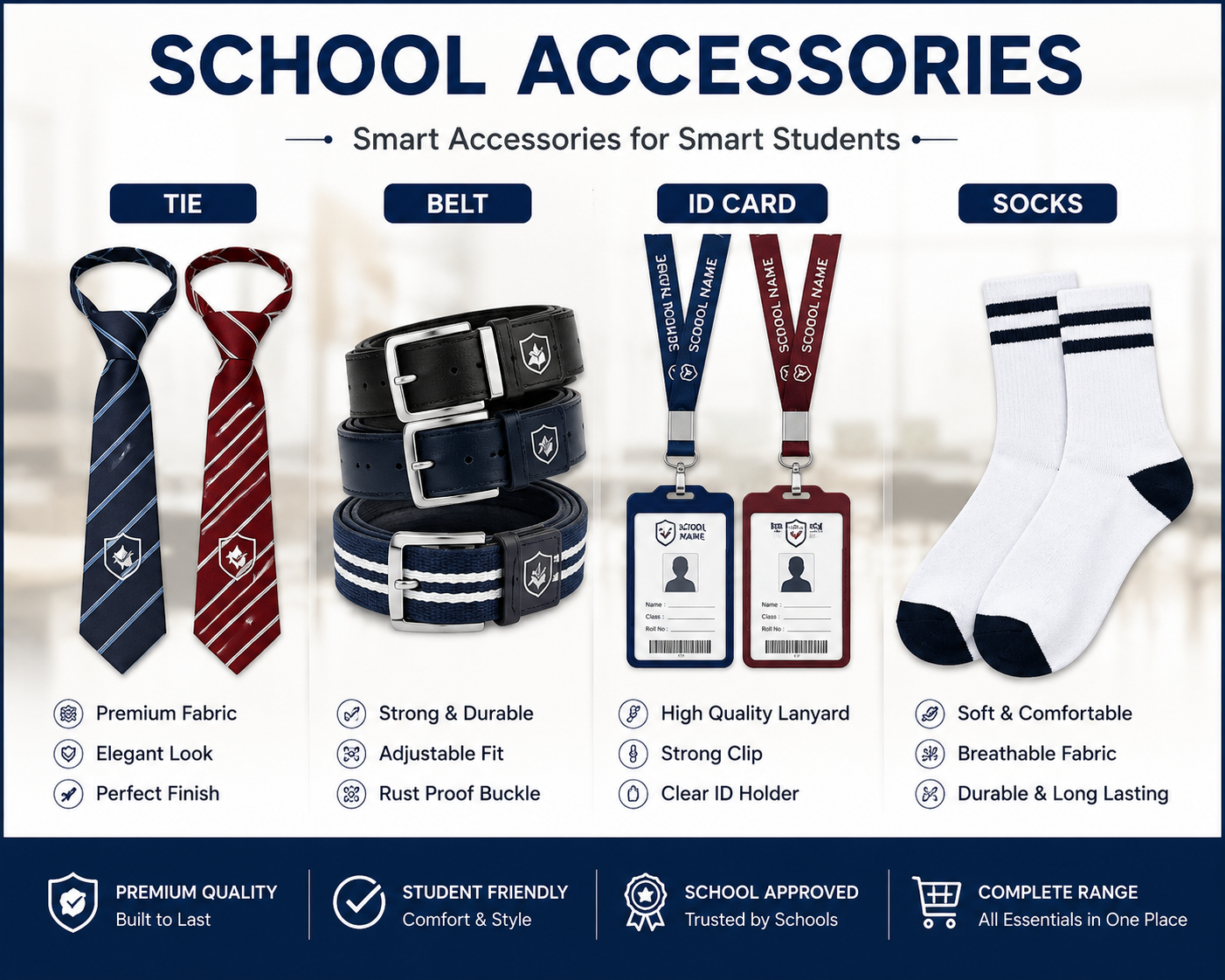
School Accessories
Essential accessories including ties, belts, socks and ID cards that complete the school uniform.
Learn More →How to Choose the Right School Uniform
Choosing the right school uniform requires more than selecting the correct colour or design. Schools and parents should consider comfort, fabric quality, durability, sizing and long-term usability to ensure students feel confident and comfortable throughout the academic year.
Choose the Right Fabric
The fabric determines comfort, durability and overall performance of the uniform.
- Select breathable fabrics for summer.
- Choose warm materials for winter.
- Use performance fabrics for sports uniforms.
- Prioritize durability for everyday use.
Select the Correct Size
A properly fitted uniform improves comfort, confidence and freedom of movement.
- Measure chest, waist and height accurately.
- Avoid buying oversized uniforms.
- Use a standard school size chart.
- Consider student growth where appropriate.
Focus on Quality & Stitching
High-quality stitching and finishing increase the lifespan of school uniforms.
- Check seam strength.
- Inspect buttons and zippers.
- Look for reinforced stitching.
- Ensure colour consistency.
Consider Daily Practicality
The ideal school uniform should be easy to maintain and comfortable for everyday use.
- Easy to wash and iron.
- Wrinkle-resistant where possible.
- Comfortable for classroom and outdoor activities.
- Suitable for the local climate.
📌 Expert Recommendation
The best school uniform balances comfort, durability, appearance and affordability. Schools should choose high-quality fabrics, standardize sizing and prioritize student comfort to ensure uniforms remain practical throughout the academic year.
School Uniform Fabric Comparison
Selecting the right fabric is one of the most important decisions when purchasing school uniforms. Each fabric offers different advantages in terms of comfort, durability, maintenance and seasonal suitability. The comparison below helps schools, parents and procurement teams choose the most appropriate option based on their specific requirements.
| Fabric | Breathability | Durability | Wrinkle Resistance | Moisture Wicking | Best Use |
|---|---|---|---|---|---|
| 100% Cotton | Excellent | Good | Low | Moderate | Summer School Uniform |
| Poly Cotton (Common 65:35 Blend) |
Very Good | Excellent | Excellent | Good | Daily School Uniform |
| Polyester | Moderate | Excellent | Excellent | Good | Blazers, Trousers & Skirts |
| Dry Fit Fabric | Excellent | Very Good | Excellent | Excellent | Sports Uniform |
| Fleece / Wool Blend | Low | Very Good | Good | Low | Winter Uniform |
100% Cotton
Advantages
- Excellent breathability for hot weather.
- Soft and comfortable on sensitive skin.
- Keeps students cool during long school hours.
- Natural fibre with excellent wearing comfort.
Limitations
- Wrinkles more easily than blended fabrics.
- May shrink if not pre-treated.
- Takes longer to dry after washing.
- Usually requires regular ironing.
Poly Cotton (Common 65:35 Blend)
Advantages
- Excellent durability for daily school use.
- Easy to wash and maintain.
- Better wrinkle resistance.
- Retains colour well after repeated washing.
- Balances comfort and strength.
Limitations
- Slightly less breathable than pure cotton.
- May feel warmer during extreme summer.
Polyester
Advantages
- Highly durable.
- Excellent wrinkle resistance.
- Quick drying.
- Maintains colour and shape.
Limitations
- Less breathable than natural fibres.
- Not ideal as a standalone fabric in very hot weather.
Dry Fit Fabric
Advantages
- Excellent moisture management.
- Lightweight and breathable.
- Quick drying.
- Ideal for sports and physical activities.
Limitations
- Generally not preferred for formal school uniforms.
- Fabric feel differs from traditional woven uniforms.
Fleece / Wool Blend
Advantages
- Excellent thermal insulation.
- Soft and comfortable during winter.
- Durable for seasonal use.
Limitations
- Not suitable for summer wear.
- Requires proper off-season storage.
- Longer drying time after washing.
📌 Expert Recommendation
For most schools across India, Poly Cotton (Common 65:35 Blend) offers the best balance of comfort, durability and easy maintenance for everyday school uniforms. Schools located in hotter regions may prefer 100% Cotton for improved breathability, while Dry Fit Fabric is ideal for sports uniforms and Fleece or Wool Blends are recommended for winter uniforms.
EduStore Uniform Size Chart
The EduStore Uniform Size Chart has been developed as a practical reference to help schools, parents and procurement teams select the most appropriate school uniform size. Since garment measurements may vary slightly between manufacturers, this chart should be used as a standard body measurement reference before placing individual or bulk orders.
📌 EduStore Standard Reference
This chart is based on standard student body measurements commonly used for school uniforms. For the best fit, always measure the student before ordering. Schools planning bulk purchases are encouraged to conduct a measurement session to ensure sizing accuracy.
👔 Upper Garment Size Chart (Shirt, T-Shirt, Blazer & Sweater)
| Size | Approx. Age / Class | Chest | Shoulder | Sleeve Length | Shirt Length | Recommended Height |
|---|---|---|---|---|---|---|
| 20 | 3–4 Years | 22" | 10" | 13" | 17" | 95–105 cm |
| 22 | 4–5 Years | 23" | 11" | 14" | 18" | 105–115 cm |
| 24 | 5–6 Years | 24" | 12" | 15" | 19" | 115–120 cm |
| 26 | Class 1–2 | 26" | 13" | 17" | 21" | 120–130 cm |
| 28 | Class 3–4 | 28" | 14" | 18" | 23" | 130–140 cm |
| 30 | Class 5 | 30" | 15" | 20" | 25" | 140–150 cm |
| 32 | Class 6–7 | 32" | 16" | 21" | 27" | 150–160 cm |
| 34 | Class 8–9 | 34" | 17" | 22" | 28" | 160–168 cm |
| 36 | Class 10–12 | 36" | 18" | 23" | 29" | 168–176 cm |
📏 Upper Garment Measurement Tips
- Measure the chest at its fullest part while keeping the tape comfortably snug.
- Measure shoulder width from one shoulder edge to the other across the back.
- Measure sleeve length from the shoulder point to the wrist.
- Measure shirt length from the highest shoulder point to the desired hemline.
- Do not pull the measuring tape too tightly, as this can affect sizing accuracy.
👖 Lower Garment Size Chart (Trouser, Shorts & Skirt)
| Size | Approx. Age / Class | Waist | Hip | Trouser Length | Inseam | Recommended Height |
|---|---|---|---|---|---|---|
| 20 | 3–4 Years | 20" | 22" | 22" | 14" | 95–105 cm |
| 22 | 4–5 Years | 21" | 23" | 24" | 16" | 105–115 cm |
| 24 | 5–6 Years | 22" | 24" | 26" | 18" | 115–120 cm |
| 26 | Class 1–2 | 23" | 26" | 29" | 20" | 120–130 cm |
| 28 | Class 3–4 | 24" | 28" | 32" | 22" | 130–140 cm |
| 30 | Class 5 | 26" | 30" | 35" | 24" | 140–150 cm |
| 32 | Class 6–7 | 28" | 32" | 38" | 26" | 150–160 cm |
| 34 | Class 8–9 | 30" | 34" | 40" | 28" | 160–168 cm |
| 36 | Class 10–12 | 32" | 36" | 42" | 30" | 168–176 cm |
📋 Important Sizing Notes
- Measure students while standing in a natural posture.
- Use a flexible measuring tape.
- Do not rely only on age while selecting the size.
- Allow comfortable movement for daily school activities.
- Recheck measurements before placing bulk production orders.
💡 Best Practices
- Record all measurements on a standard measurement sheet.
- Verify sizes during trial sessions whenever possible.
- Maintain one approved size chart across the school.
- Keep 2–3 sample sizes for physical verification.
- Standardize sizing for future academic sessions.
⭐ EduStore Expert Recommendation
For the most accurate fit, always take fresh body measurements instead of selecting sizes based only on age or previous uniforms. During bulk school uniform projects, EduStore recommends conducting a structured measurement camp using a standardized size chart to minimize alterations, improve student comfort and ensure consistent fitting across all classes.